THE ROSES I ALMOST DIDN'T PHOTOGRAPH
On late summer, looking longer, and finding beauty as the garden begins to change.
BURNELL McKENNA
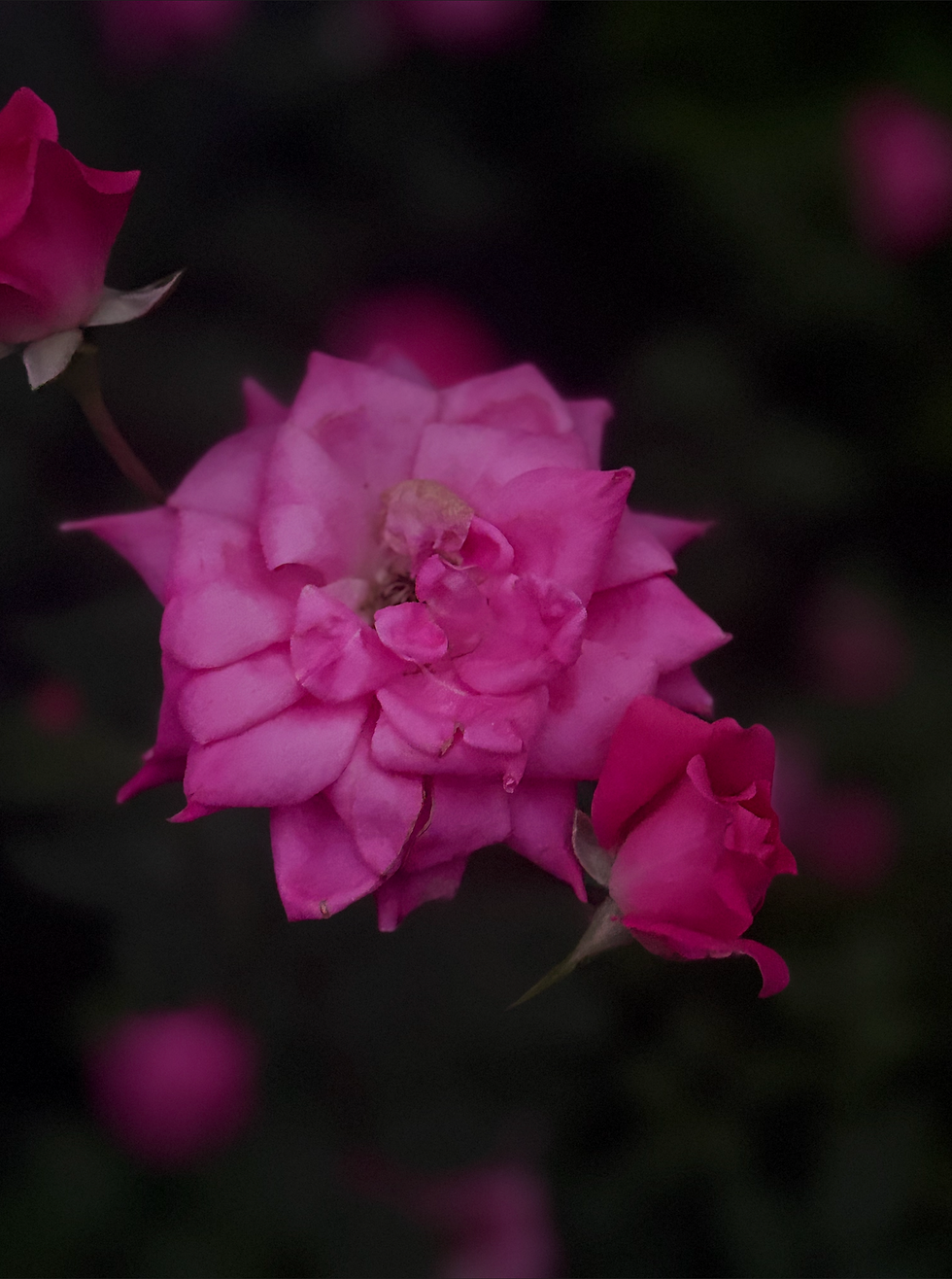
There is a particular moment in a garden when a rose is supposed to be photographed.
Freshly opened. Petals perfectly arranged. Colour luminous. No brown edges, no bruising, no evidence yet of rain, heat, insects or time.
I photographed those roses too. They were impossible not to: brilliant pink against deep green leaves, with flashes of crimson, cooler rose, almost-white highlights and violet hidden in the folds.
They were beautiful.
But they weren't the roses that stayed with me.
Walking through the garden in these last weeks of summer, I find myself looking elsewhere. It isn't autumnal yet — the roses are still startlingly pink and the leaves still green — but something has shifted.
The evenings arrive a little earlier. The light feels different. Among the extravagant blooms are flowers beginning to curl, fade and quietly surrender themselves to the next season.
Looking Beyond the Perfect Flower
I began photographing those flowers too.
Some petals had curled backwards. Others had developed tiny ochre marks along their edges. A few blooms were beginning to collapse inward, their once-smooth petals becoming crumpled and papery.
My first instinct was probably the instinct many of us have when taking photographs:
Not that one.
Find the perfect flower. Move the camera slightly. Crop out the damaged petals.
But being an artist has taught me to distrust that instinct sometimes.
When I stopped deciding what the rose should look like and started looking at what was actually in front of me, the ageing flowers became extraordinarily interesting.

The shapes were stranger and the colours more complicated. Petals twisted into unexpected forms; pink moved into mauve, cream, faded coral and brown. Shadows appeared where petals folded over one another.
There was suddenly much more to look at — and, for a painter, much more to paint.
What I'm Learning from the Garden
I'm learning that I don't need the garden at its most spectacular to want to paint it. Perhaps the opposite is becoming true.
I'm increasingly drawn to the moments in between: the bud beside the bloom, the rose opened just a little too far, brilliant pink softening into something quieter, ochre appearing along an edge, one flower bowing as another opens.
These are things I might once have edited out. Now I move closer.

I think painting has changed the way I look at them.
Watercolour requires a particular kind of attention. Standing in front of a flower and thinking about how I might paint it, pink suddenly becomes an inadequate description.
There is raspberry in shadow, coral where light passes through a petal, bruised violet in a fold, cream and ochre where the flower has begun to age. The greens are equally complicated — soft grey-green, flashes of yellow-green, deep greens disappearing into shadow.
The longer I look, the less useful the words pink rose become.
Perhaps that is one of the things I love most about being an artist: the work continues even when there is no paintbrush in my hand.
Looking is part of the work.
I think this is increasingly where my paintings begin — long before I choose the paper or reach for a brush. They begin in these small acts of looking: noticing where a brilliant pink slips into violet, where an edge disappears into shadow, or why one imperfect flower keeps pulling my eye back towards it.
The Flower After Its Finest Moment
There was one rose I kept returning to with my camera. It was well past what most people would consider its best: petals hanging down, brown patches across the pink, its centre crumpled and dry.
Behind it, another flower was still gloriously pink and full.

I love that photograph. Perhaps even more than some of the photographs of the perfect blooms.
There is something tender about it.
The flower hasn't stopped being beautiful. Its beauty has simply changed.
Perhaps this is one of nature's quiet gifts: it has very little interest in remaining pristine for us.
A flower opens. Rain marks it. Colour changes. It begins to fall apart.
None of those stages is a mistake.
Perhaps beauty was never meant to be frozen at its most perfect moment. Perhaps part of its beauty is that it doesn't stay.
When the Light Changes
I've been photographing the roses in the evening too.
They become completely different flowers.
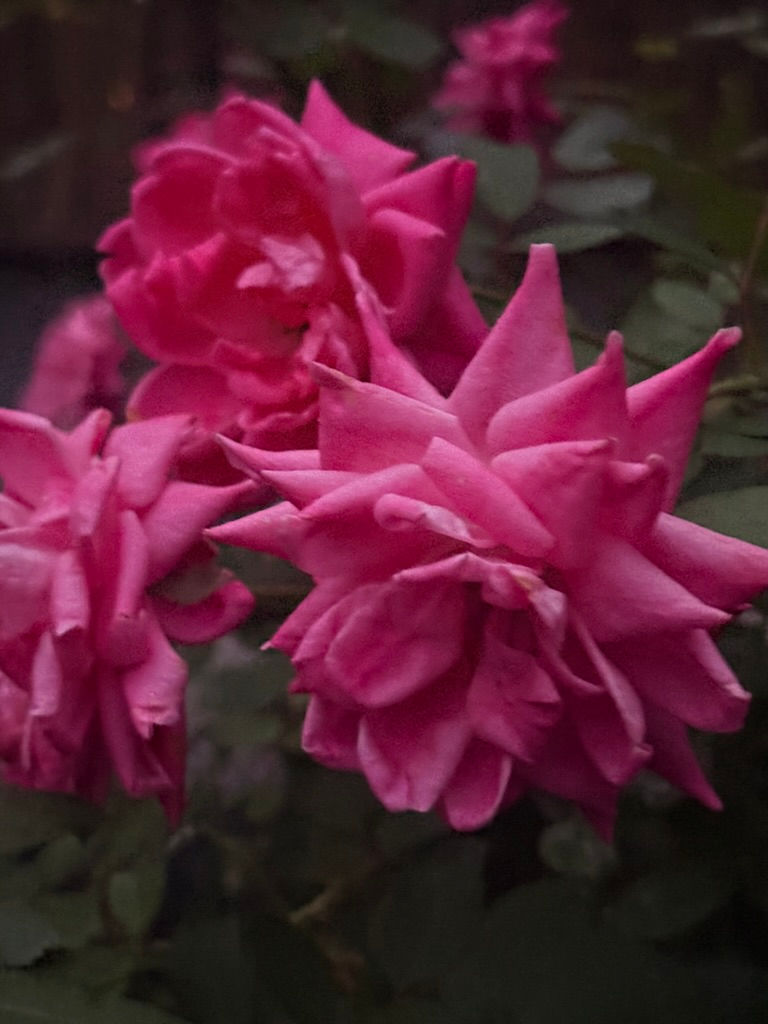

The vivid pink that almost glows in daylight deepens into raspberry and wine. Leaves disappear into shadow; edges become less certain.
The garden begins to feel less like something to document and more like something remembered.
Perhaps that's where I find myself creatively too — somewhere between recording what I see and allowing memory, atmosphere and feeling to enter the work.
Summer is still here, but the light falls differently. Some flowers are opening while others are already letting go.
It isn't autumn yet.
But you can feel something beginning to change.
Back in the Studio
These photographs will eventually come back to the studio with me, though I rarely know which one will become a painting.
More often, something smaller follows me home — a colour relationship, the bend of a stem, the way one petal disappears into another, a flower caught in a particular light.
I don't think of a photograph as an instruction for a painting. It is a trace of the encounter — a way back to the light, colour and feeling of having stopped to look.
Eventually, some of those fragments find their way into my watercolours. That's why the garden and studio have become so intertwined for me.
The garden is where I gather. The studio is where I make sense of what I've gathered.
And somewhere between looking and remembering, photographing and painting, something new begins.
A Letter from the Studio
Lately, I’ve been thinking about observation not only as part of painting, but as a way of moving through the world a little more slowly.
In my studio letters I share what I’m painting, the gardens and landscapes I’m noticing, works in progress, exhibitions and the small discoveries shaping my work.
If this is your kind of world, I’d love to send the next one to you.
The Secrets of Watercolour
Notes on painting, nature and the art of noticing.
As Summer Leaves
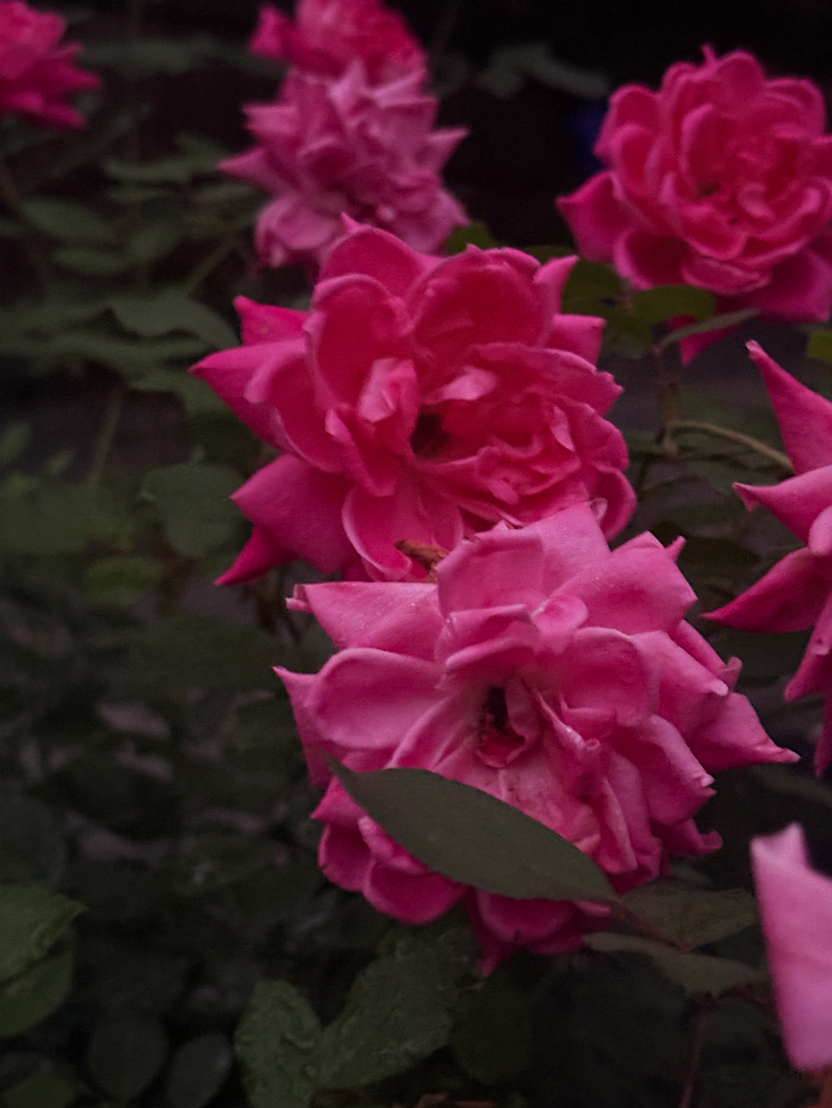
Summer is beginning to loosen its hold on the garden, and I'm not quite ready for it.
There are still roses opening, colours glowing and afternoons reluctant to end. But there is something beautiful about noticing a season as it begins to change.
Not rushing towards what comes next. Not wishing what is here away.
Just looking a little longer.
Until next time,
Burnell


Comments